
I grew up in a family that always adopted our furry family members. We rescued a mastiff-lab mix when I was in kindergarten, then we got our Yorkie-Maltese mix Chewie a few years later. My childhood best friend, Callie the husky-mix, was also adopted, but all of these friends joined our families when they were pups. After I moved out on my own a few years ago, it took me some time before I finally rescued my first dog (mostly due to landlord restrictions), but when we did, I was only interested in adopting an older dog.

There are largely two reasons I was looking for an adult, the first-being that my husband (then-boyfriend) and I both work full-time, and I knew we did not have the energy or time to train (and potty-train) a puppy. Rescuing an older dog doesn’t guarantee they are trained, but for the most part, they are, especially if they’re coming from previous homes. This was a big perk, but mostly I was worried about these older dogs in the shelters that weren’t going home. Almost 400,000 dogs are euthanized in shelters every year due to overcrowding, most of them being older dogs because they are less likely to be adopted overall.
(I’m proud to say this number has gone down drastically since I did a report on it in my college public speaking class, when the number of dogs and cats euthanized each year was 2.6 million. If you ask me though, 400,000 is still about 400,000 too many.)
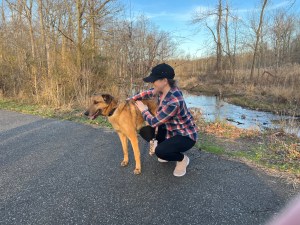
In 2021, we welcomed Clyde into our family at around age 5, that was our best guess. He was clearly an adult with little gray hairs already peeping out under his chin. It’s been 3.5 years now with this guy, and we wouldn’t have it any other way. He immediately bonded with us, wanting his forever home and love so badly. He’s the biggest love bug, and he loves rubbing up on us like a cat would for attention.
Puppies are a big commitment, and that’s not to say Clyde wasn’t either. But the attention and care Clyde needs compared to a puppy is much easier, in my opinion, and I’ll share why. Many people are hesitant to rescue an adult dog, but that means those dogs need a home more than anything. They are harder to re-home in shelters, which means they usually won’t make it out to find a family that could give them all the love they desperately need.
Myth: “Older dogs have more health problems”
We have not had any major health issues or things to be worried about yet with Clyde. When we rescued him, we took him to the vet for a thorough visit to be sure, as you must with any new pet. Sure, dogs tend to have more issues later in life as they age just like people, but puppies can have just as bad health issues, especially if that puppy came from a hoarding situation, off the streets, or a bad breeder. Purebreds and certain breeds, particularly the popular ones everyone is always dying to have, are even predisposed to different health conditions, so even puppies can have issues, even if you’re going to a breeder or “shopping” for a purebred.
Myth: “They’re abused and therefore dangerous“
Research, and most importantly meet-and-greets, are so important in determining the dog’s temperament before you bring him home; you shouldn’t expect to take home a dog the day you meet it or decide you want one; it takes time to find the right fit if you want this to work. But the idea that all homeless dogs come from abusive homes or they’re dangerous is wrong. Quite honestly you never know where a dog is coming from. We have debated many times what Clyde’s story was before us: maybe he was an outdoor dog since he seems to hate being outside so much, or he grew up without toys because he doesn’t know what to do with a ball or bone (but he will always find a sock or blanket and make the most of it, as if those are the only toys he knows…). He is so gentle with kids, which makes us think he grew up with some. The truth, though, is we may never know how he grew up, but it’s clear he was a good boy. Well-trained, respects boundaries, and always wants to please his owners.
That said, he’s terrified of loud noises, men with hats, and strangers who approach him. We don’t know why these things scare him, but they don’t make him dangerous; he more often will run and hide under the bed than bark, and I couldn’t imagine him getting physical with someone.
Myth: “Puppies Are More Train-able”
Clyde was fully trained when we rescued him. He knew his commands like sit and stay, wait, be good, stop barking…. He’s learned new things with us too, but I think the most important part here is he was trained. Not all adult dogs may be, but that’s why you do your research and spend time with them before you take them home. It’s important to make sure it’s the right fit, for both you and the dog. Clyde, we have learned, is just a well-behaved boy who wanted someone to love him. On our meet-and-greet visit, he did all the tricks for us and took treats nicely from us. After our first night with him, we just knew he was a 100% purebred good-boy! The best breed to have.
Training puppies is a time commitment and a challenge. It is something you will need to start working on the moment they come into your home, and it takes time. You have to be ready for setbacks and failures, like the time Callie, our pup growing up, ate my mom and dad’s wedding album, or when Chewie chewed the bottoms of all our dining room chairs. As a busy woman with a full-time job that comes with an even busier travel schedule, I knew we did not have the time to train a puppy, which is why Clyde was perfect for us.
Consider your lifestyle and what would fit best. Do you have the time and experience to train a puppy? Time and patience to clean up 💩 in your home regularly for a bit? Is your family okay if they get a little nibbled or things get chewed on? So many things to consider when taking in a puppy or untrained dog, which may sway you to better prefer a trained buddy. Even just having a dog that is house trained is a blessing, and you can still teach him new tricks, despite what they tell you.
Myth: “An adult dog will just miss his old family”
Clyde never acts weird about his new home here with us. We feel all the love from this guy, and that’s all he wanted from the moment he came into our home. He wanted love and affection, comfort and a reliable family. The only time we noticed something weird was one day at the beach, he found a Dachshund and followed it everywhere, including right into its owners car when they were leaving (meanwhile, I was screaming his name chasing after him tripping in the sand!)
I think he may have lived with a little buddy at one point, and so now a year ago, we took in our second dog, a 15-lb American Eskimo that was returned by his owner. We tried a few different meet and greets with Clyde when we were ready to adopt our second child, and he told us right away that he did not like them. However, when we brought him to meet Archer, it was like love at first sight between these boys, instant best friends! In some ways, having his “brother” now has opened him up even more, and we can see how much more comfortable he is at home, his furever home.
Myth: “Puppies Will Live Longer”
Is that really the most important thing to you, how long you have with a pet? If so, maybe just look at cats😅
If you have young kids it may be important to you, but when we talk adult dogs, we are talking about dogs over 3 as much as dogs over 10. The older they are doesn’t necessarily mean the shorter they will live. And consider that again with a puppy, those first couple of years will be focused on training and discipline, whereas with Clyde we skipped the crate-training and went right to sleeping in bed together! (That’s an exaggeration, Clyde actually likes to come on the bed for five minutes of cuddles and a bedtime treat, then he heads off to the couch where he prefers to catch his Zzz’s, but Archer has slept in our bed since night one, a total cuddle bug!)
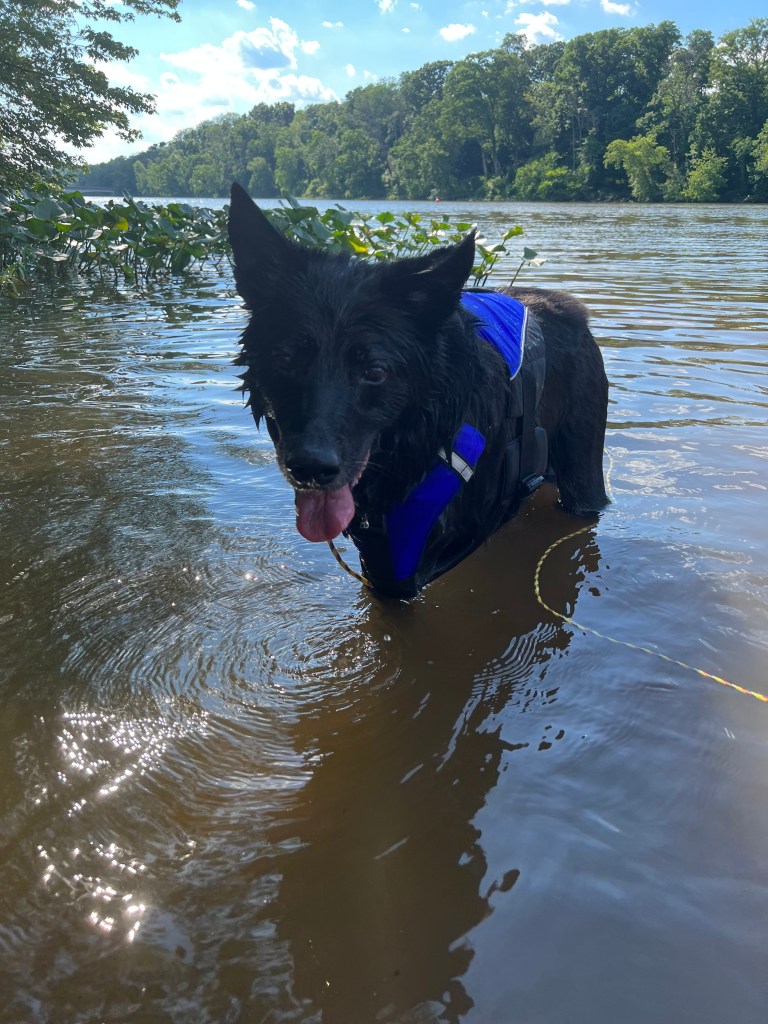
The truth is though you never know how much time you have with your furry friend. Our family’s 13-year-old 3-legged rescue far surpassed the vet’s expectations; my parents and sister rescued Troy the Tripod during COVID in his later years knowing he didn’t have much longer to live. We knew adopting him at 9 years old that a goodbye was closer than it would have been with a puppy, but I couldn’t imagine our lives without him over the last 4 years. He made every moment of it memorable, we enjoyed spoiling him until the very end (which was sadly this September), but at the end of the day, we will never have enough time with our dogs, we will always want more, whether we had 4 years or 14. It hurts all the same, but knowing you gave a good dog the best life and getting to call him family, that’s everything.








 Just Your Best
Leave a comment